More Than a Feeling: The Hidden Benefits of Sensory Bins

You know those minivan and suv commercials where they make the car look like it can do literally anything?

That’s basically the same as a sensory bin.

What is a sensory bin?

A sensory bin is a container filled with a variety of materials cultivated to ignite one or more of the five senses: touch, sight, smell, sound, and taste. You’ve probably seen water tables and sand tables at Target or Walmart. You might even have one in your backyard! There are tons of tutorials on the internet that show how to use pvc pipe and storage tubs to create a cheap table. I’ve found that those plastic under the bed storage tubs straight on the floor work wonders. You can move it anywhere (speaking from experience, don’t try to move it when it’s full) and you can store your materials in it when you’re done!
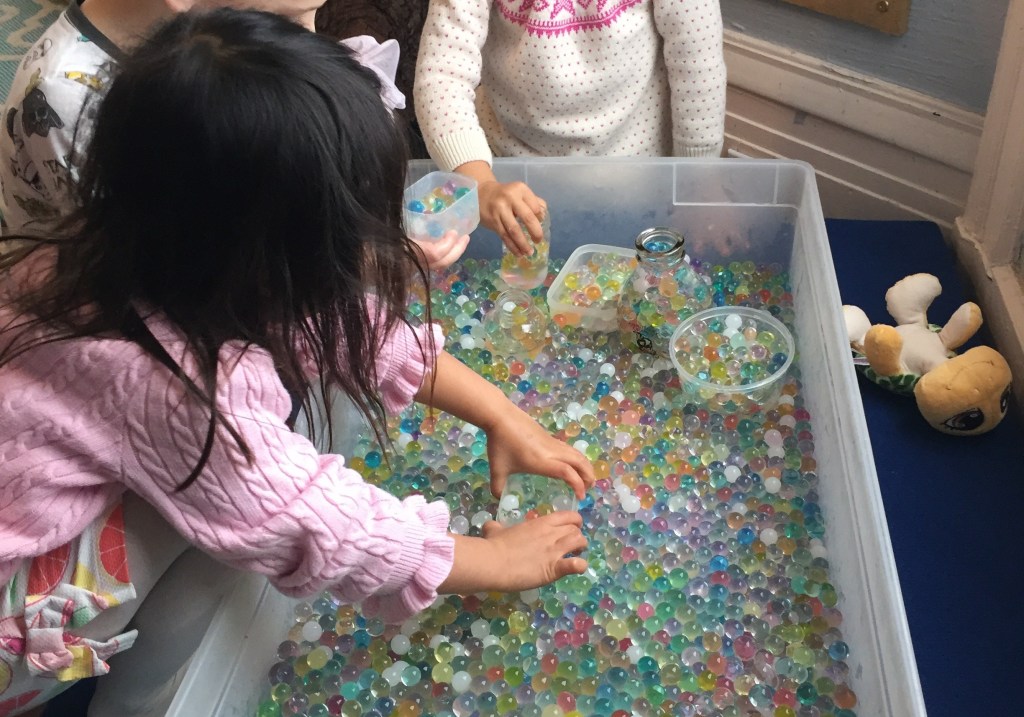
Scroll to the end of this post for a list of materials for your sensory bin!

Continue reading

How to Communicate with Kids; part 2

This is part two of a two part series on effective communication with young children. You can find part one here.


As I’m sure you gathered by now, this is a post about communicating with young children. My original draft of this post was entirely too long for my taste so I split it into two. Last week, I posted a part one and this week I’m sharing the rest with you. The following tips are things I’ve learned in the last 15 years of working with children. Tried and true, they’re bound to make your interactions with your children much smoother. Continue reading

How to Communicate with Kids; part 1

This is part one of a two part series on effective communication with young children. You can find part two here.


“You’re so good with them.”

“How do you get them to listen to you like that?”

“Kids are just naturally drawn to you. They just want to do what you say.”

“I don’t know how you do it.”

“Wow, you’re so patient.”

I don’t have enough hands to count the number of times my peers and I have heard these phrases throughout our careers. I wouldn’t consider myself exceptionally patient and I don’t know that children just naturally come to me.  I’m not a parent yet, but I’ve worked with children long enough that I’ve learned some super effective strategies for talking with young children and gaining their cooperation. The following tips don’t work all the time — nothing is perfect, especially in regards to children — and they certainly aren’t always easy, but they work a lot more than yelling and sighing. Continue reading

Misunderstanding Misbehavior

Have you ever played Good Guy/Bad Guy with your child?

Have you ever asked them what makes the Good Guy good or the Bad Guy bad?

Their answer is usually:

“The Good Guy is good because they save people. They’re nice. The Bad Guy is bad because they steal/push/yell. They’re mean.”

In this simple game, the behavior of the person defines the character of the person — whether they are to be considered “good” or “bad.”

But have you ever told your child that the reason you (as Bad Guy) are stealing everyone’s jewelry is because you want to give it to your mommy? Continue reading