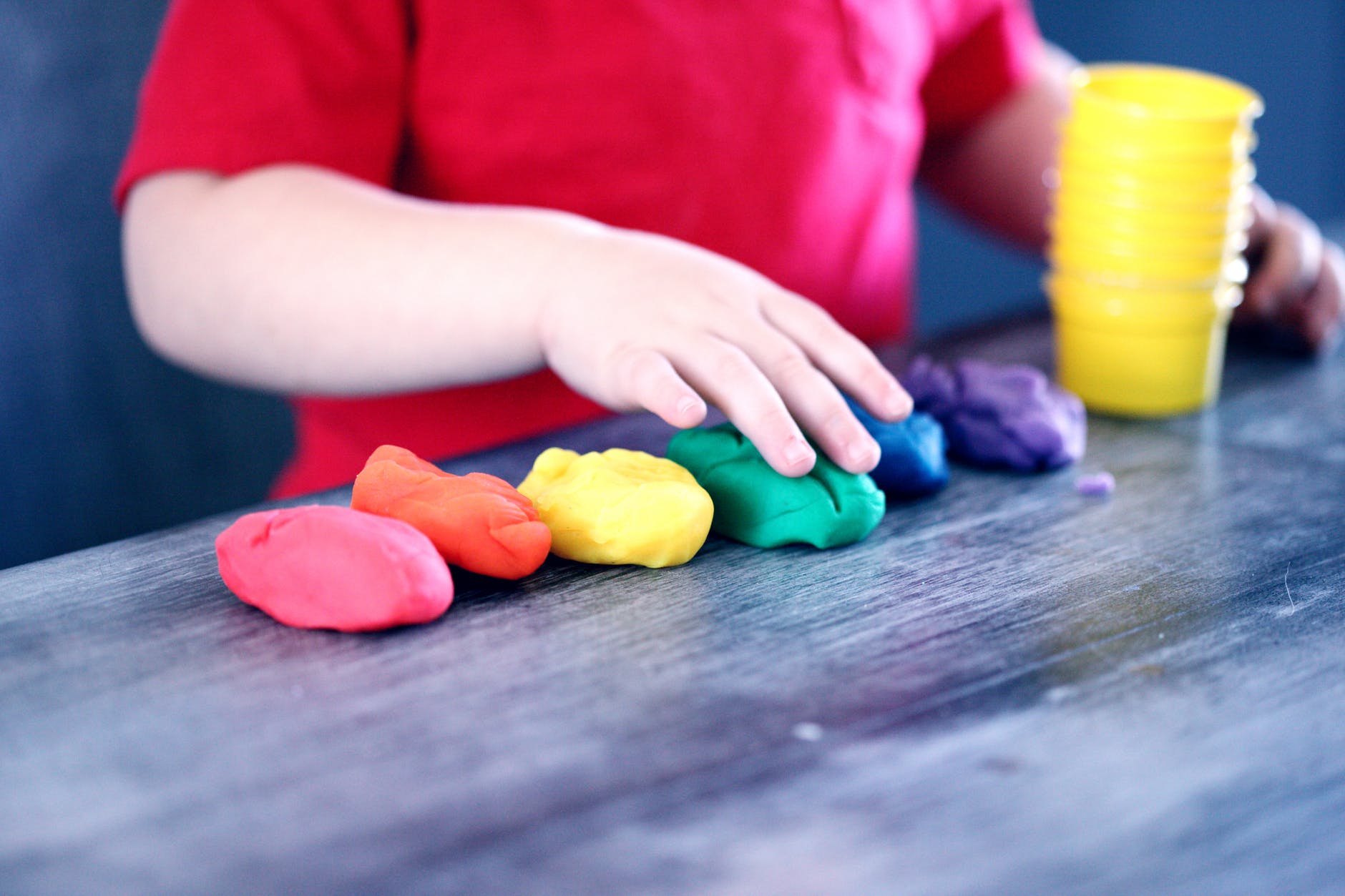
Last week we talked about the importance of fine motor development, so this week I want to share some of my favorite fine motor experiences with you! They all require gathering some materials but you can typically find most of these things lying around your house or at a dollar store. They’ll work to strengthen those little hand muscles needed to start writing and drawing and being more independent. These activities are sure to be home runs for your little ones!
Sensory bins
Sensory bins are one my very favorite things in the whole world! I played with them constantly as I was growing up and I always get excited when the classroom sensory bin needs supervising. (Because it means I can get my hands dirty too!) You can search all over the internet and find tons of bin ideas but the concept is pretty basic.
- Choose whatever base you want — oobleck, water, sand, beans, rice, pasta, shredded paper, cotton balls…
- Then add tools — measuring cups, an ice cube tray, training chopsticks or children’s tweezers, spoons, forks, tiny cups, sponges…
- Last, if you want, add extras — tiny plastic animals, toy trucks and cars, pipe cleaners, floral stones, marbles, legos…
Sensory bins will strengthen fine motor skills but they also satisfy that urge kiddos have to get messy and touch everything. Plus they’re a great place for kids to decompress and refocus when they’re upset. In all of my teaching years, I’ve only encountered a couple of kids who are a little sensory bin averse. If that’s the case with your little one, just take it slow. Model how to play with bins. Encourage your kid to try it out. Maybe even convince them to give the materials a tiny touch. Most importantly, don’t stress or make a big deal about it and definitely don’t force it. They’ll get there eventually.
(Stay tuned for a more in depth look at sensory experiences!)
Loose part art
I only recently started exploring incorporating loose parts into the classroom but I’m a big fan. Loose parts are materials with no specific purpose but can be added to play to become whatever the child needs. (Think wine corks, rocks, or beads.) They pique the imagination and encourage kids to think creatively. I love to set up a table with an empty frame and small bowls full of loose parts. Kids can create different masterpieces over and over again, changing things up as they go along. There are no cries of “Oh no! I used the wrong color!” or “I don’t like the way it looks and I can’t change it now!” because it’s so easy to adjust. How does this help fine motor development? Pinching and small hand movements are required to manipulate the parts and get them in just the right place.
Some of my favorite loose parts:
- small stones
- plastic bottle caps
- twigs
- acorns
- beads
- mosaic tiles
- nuts, bolts, and washers
- shells
Beading
Beading is a pretty traditional way to strengthen fine motor development and it’s lasted this long for a reason. Kids, especially toddlers, really love it! With toddlers you’ll obviously want to supervise this activity but older kids (depending on the kid) can be more trusted to not put the beads in their mouths. There are so many variations for beading and lacing that you’re sure to find something your kiddo can do easily, as well as something that challenges them. Start off using large pipe cleaners and those large wooden beads. As it gets easier, start adding in smaller pipe cleaners and smaller beads. Eventually, you can add string and speciality and pony beads to the mix. Get ready to be flooded with bracelets and necklaces!
Playdough
I remember the days of my childhood spent making food out of playdough with my big sister (specifically peas and carrots for some weird unknown reason). Playdough is probably one of the best things kids can play with. It scratches that creative itch. It strengthens hands. It even helps to provide an avenue to connect with kids who don’t like to open up to others by removing some of the pressure to perform. (More on this later.) The best thing is that playdough is CHEAP. No, not name brand playdough. Not even generic playdough. I’m talking about making playdough at home. It’s super simple and kids can help! You probably have all the ingredients in your pantry already.
Check out this super simple no cook recipe I swear by!
My classes were obsessed with making playdough — especially the kneading part — and always asked to make more. I promise you, this one is a guaranteed winner.
I hope you and your little ones enjoy these as much as I do. Let me know which ones you try or if your kids have a favorite fine motor activity I didn’t list!
Happy growing!
 Living Arrows
Pingback: Where is Thumbkin?: Fine Motor Skills | Living Arrows
Pingback: More Than a Feeling: The Hidden Benefits of Sensory Bins | Living Arrows
Your link to the no cook playdough doesn’t seem to be active anymore. Any chance you can repost? Thanks!!!
LikeLike
It’s been a long time coming but I fixed the link! Now you’ll get to see exactly how I make play dough!
LikeLike