This is part two of a series on promoting literacy in the infant/toddler – preschool years. You can find part one here and part three here.
When I got my first job teaching in a classroom, I was so excited to build up my classroom library. As a lover of stories in all forms and a self professed bibliophile, it was my dream come true to have an actual reason to load up on books. It wasn’t long after that I learned how expensive children’s books are! How could a 32 page long picture book cost and an arm, a leg, and a firstborn?!
Begrudgingly, I surrendered to my circumstances and just accepted any and all children’s books I could get my hands on. I was desperate.
I knew the quality of the books in my classroom library was mediocre at best and I resolved to gradually add better books and get rid of the subpar books as quickly as I could.
Why was it so important for me to have high quality children’s books?
If you want your children to grow up to like challenging books or to tackle the classics or to read more than just one type of book, you have to start them young. You have to find that fine balance between books that are enjoyable and books that challenge the reader. High quality children’s books open new worlds to their readers. They offer up circumstances and situations that children may not otherwise be exposed to. They present emotions and challenges they can relate to. They provide fodder for their wild imaginations, opportunities to make predictions, and entertainment over multiple reads.
I know, I know, I can hear you.
“Wait a second,” you’re saying. “Good books? Isn’t that just a matter of opinion?”
As adults, we consider certain books to be quality literature and it’s no different for children’s books. You can read a high quality book and still not enjoy it because of your own personal taste, but there a many traits that make a good book.
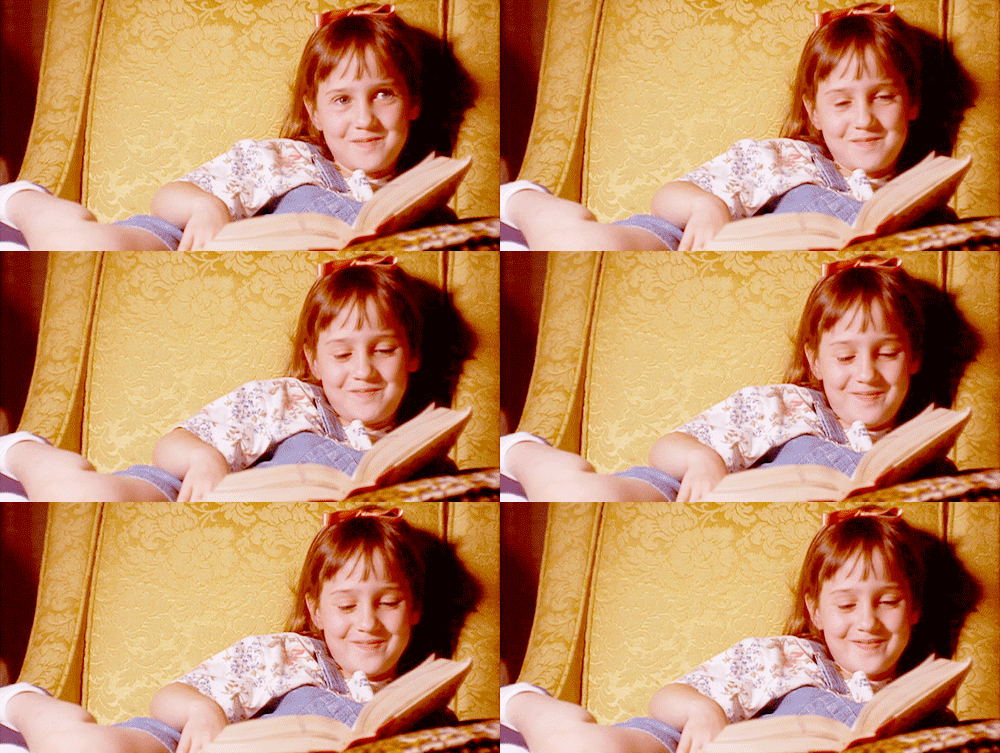
Here are a few things that you should consider when purchasing children’s books.
PLOT
When you read the book, are you engaged in the story? Are you bored after about three to four pages? A quality book will have you reading it over and over and over again. Choose books that provide opportunities for children to make predictions about what will happen next. A great starting point are some of the old classic fairy tales like The Three Little Pigs or The Little Red Hen. We’ve heard them a thousand times, but they’re brand new to our kids! While you’re reading, take a quick pause to ask “What do you think will happen next?” and see what they have to say. Once they’ve mastered making simple predictions, you can move onto more challenging books, such as Heckedy Peg by Audrey Wood — a thrilling story involving a kidnapping witch and a heroic mother (that also happens to have some of the most beautiful illustrations I’ve ever seen in a children’s book).
ILLUSTRATIONS
Look for books that have interesting illustrations like Knuffle Bunny or Too Many Tamales. Before children ever begin to read words, they can “read” pictures. Some children’s books don’t even have words (wordless books) and are a great way to start teaching your kids to read pictures. An added bonus, it provides precious quality time together as you both share your ideas of what’s happening in the story.
Reading pictures is a valuable skill for your kids to have. It requires them to process visual images and translate that to information. They have to read faces for emotions and use context clues to determine what is happening. It also can come in handy when your kid wants you to read them a book “RIGHT NOW!” After you’ve had some practice together and your kid is familiar with it, you can ask them to do a “picture walk” of the book they want to read to buy yourself a few minutes before you join them.
VARIETY
One of the most important things you can do while buying books for your child’s personal library is to ensure variety in genres, characters, topics, and illustration styles. We often think of genres as just fiction and nonfiction but there’s a huge amount of subgenres in there too! In nonfiction, there are reference books, encyclopedias, biographies, instructional “how to” books, histories, and more. There are tons of genres that fall under the fiction umbrella but to keep it simple, I like to narrow things down to realistic fiction, imaginative fiction, and folklore. Try to have books from each of these genres to cover a wide range of interests.
Additionally, children’s books are a great way to showcase diversity, differences, and similarities between people and help children understand people who are different from them. While folktales are a great resource for this (there are countless versions of Cinderella from different cultures around the world), you can find diversity in contemporary books as well.
It’s true that children’s literature has long been accused of a lack of diversity, and as a result, books written by or about people of color are being published more than they used to be. (Unfortunately, according to one study, they still only make up about 22% of children’s books.) As our beliefs about gender diversity are changing, you can find more and more children’s books about gender nonconforming children and acceptance. You can also find books featuring characters with special needs varying from hearing impairments to autism to physical disabilities and more.
When I look back on favorite books from my childhood, I’m reminded of The Littlest Mermaid by John T. Stapleton. It’s not a well known book and to be quite honest, I don’t even know if it’s still being printed. The story is about an underwater city of mermaids where one day, a mermaid is born whose purple skin and dark hair looks nothing like the other mermaids. She is shunned and neglected because she looks different from the others which, understandably, upsets her. One day, a curious mermaid befriends the purple mermaid. The other mermaids see that the purple mermaid isn’t that different after all and they accept her as one of their own. From that day forward, mermaids of all colors are born and celebrated in their city. Not once in that book is the concept of discrimination or racism named outright but it taught me something very important in a way I could understand as a small child, a lesson that has stuck with me since the first time it read that book. Everyone deserves to be celebrated, accepted, befriended, and valued regardless of their appearance.
So as you’re looking for children’s books for your kids, your classroom, or a birthday party, make sure you’re searching for quality books. That tiny bit of extra effort will make all the difference.
P.S. The easiest way to find good books is to look for the award winners. The covers of these books are almost always printed with a shiny gold or silver seal right on the front. Your local librarian should be able to help you find recent and past winners, and many times you can find a shelf or table dedicated to award winners at bookstores.
 Living Arrows
Pingback: Literacy Before Kindergarten: Creatures of Habit | Living Arrows
Pingback: Literacy Before Kindergarten: Intention in Book Selection | Living Arrows